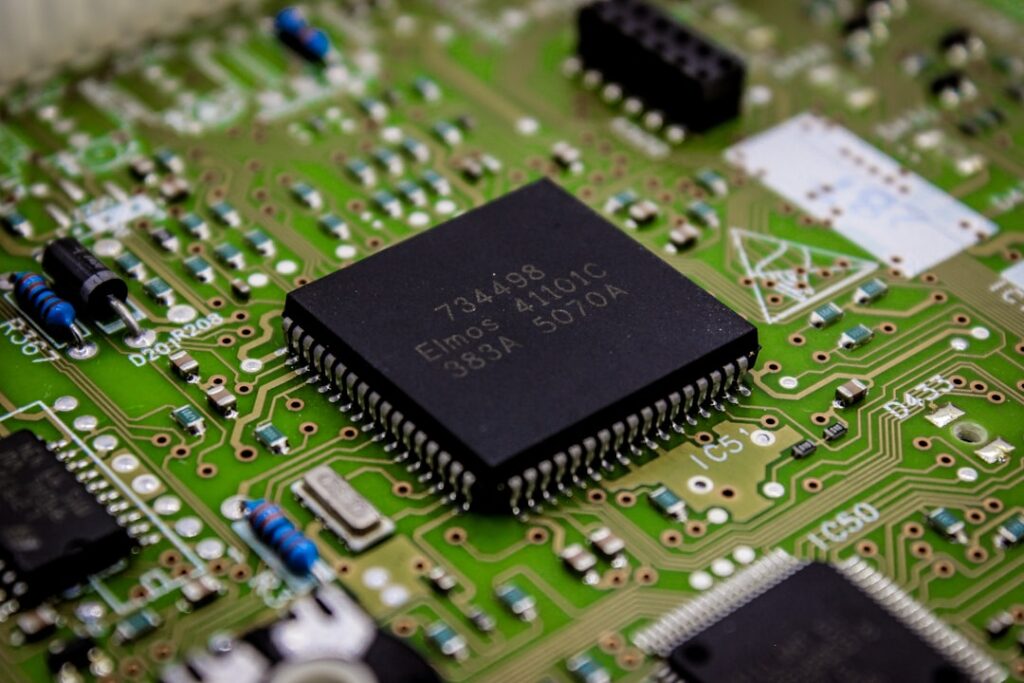
Miniature power driving smart tech
Integrated circuit chips have become the cornerstone of modern electronics, enabling the compact, efficient, and intelligent devices that shape our daily lives. From smartphones and computers to medical equipment and automotive systems, these tiny silicon-based components have revolutionized how technology functions, performs, and evolves. Their ability to integrate millions of transistors into a single chip has made it possible to design smaller, faster, and more energy-efficient devices than ever before.
The concept of integrating multiple electronic functions onto a single chip emerged in the mid-20th century, transforming electronics from large, bulky machines into compact and portable systems. Integrated circuit chips, also referred to as ICs or microchips, consolidate functions such as processing, memory storage, and signal amplification. This integration reduces the need for multiple discrete components, thereby minimizing size and power consumption while improving reliability.
Today, integrated circuit chips serve as the brains behind virtually every electronic device. They are categorized into analog, digital, and mixed-signal chips depending on their function. Analog ICs handle continuous signals and are commonly used in audio and radio-frequency applications. Digital ICs work with binary data and are essential in computer processors and memory modules. Mixed-signal chips combine both analog and digital functions, making them indispensable in devices like smartphones and digital cameras.
Manufacturing these chips involves highly sophisticated processes. The journey begins with a silicon wafer, which undergoes photolithography, etching, doping, and deposition. These steps create the intricate patterns that define the chip’s electronic circuits. As technology advances, the scale of these patterns continues to shrink, adhering to Moore’s Law, which predicts the doubling of transistors on a chip approximately every two years. Smaller transistors mean faster processing speeds and lower energy use, which are critical for mobile and high-performance computing applications.
The design and programming of integrated circuit chips are just as important as their physical construction. Engineers use specialized software to create circuit diagrams and simulate their function before manufacturing begins. This design phase ensures that the chip will perform reliably in its intended application. The integrated circuit chip also needs to be programmed and tested thoroughly to meet the specific requirements of the end device, whether it be an embedded system in a car or a sensor in a wearable health monitor.
As chips become more complex, their applications continue to expand into new areas. In the automotive industry, advanced driver-assistance systems rely on ICs to process data from cameras, radar, and lidar sensors. In the healthcare sector, diagnostic tools and implantable devices use chips to monitor and transmit patient data. Even the growing field of Internet of Things (IoT) depends heavily on ICs to connect and manage smart devices across homes, cities, and industries.
Despite their small size, integrated circuit chips have a significant environmental and economic impact. Their global supply chain involves raw material sourcing, high-tech manufacturing, and intricate logistics. Recent supply shortages have highlighted the critical role that chips play in global commerce, prompting increased investment in domestic semiconductor production. Furthermore, as devices become more sustainable, the pressure is on to develop chips that consume less energy and are easier to recycle.
In educational and research settings, ICs offer a platform for innovation. Students and engineers use them in development boards to prototype new technologies, from robotics to environmental monitoring systems. The accessibility of programmable chips has fueled a surge in DIY electronics, enabling hobbyists and startups to bring their ideas to life without the need for large-scale manufacturing resources.
The future of integrated circuit chips lies in continued miniaturization, enhanced performance, and new materials. Researchers are exploring alternatives to traditional silicon, such as gallium nitride and graphene, which promise greater efficiency and speed. Quantum computing and neuromorphic architectures also represent frontier areas where ICs may evolve to mimic human brain functions or perform computations at previously unimaginable scales.
For those interested in learning more about how integrated circuits are programmed, tested, and applied across industries, resources such as professional electronics solutions provide valuable insights. Staying informed about these advancements is key to understanding the future of technology and the role microchips will continue to play.
As the demand for smarter, faster, and more efficient devices grows, integrated circuit chips will remain at the heart of innovation. Their ongoing development not only fuels technological progress but also shapes the way we live, work, and connect in the digital age.