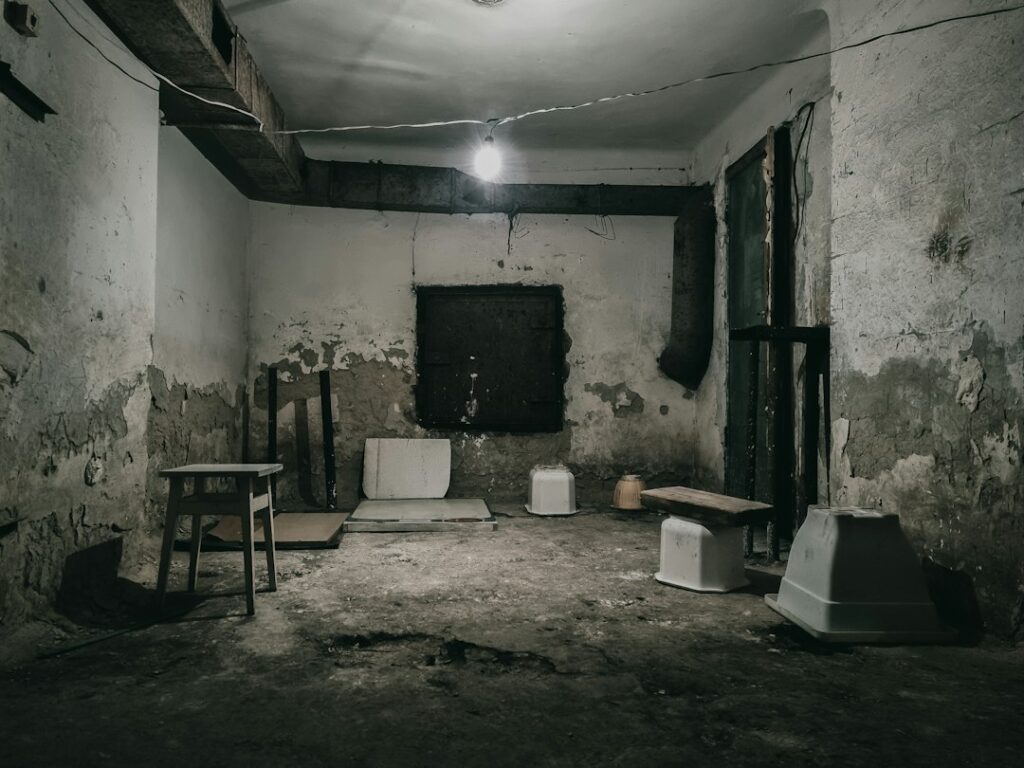

Begin the investigation outdoors. Check whether ground falls away from the house or directs rain toward it, and look at the condition and discharge point of every downspout. A downspout that ends beside the foundation can saturate soil near the footing, where the wall meets the base of the structure. Settled paving can create the same problem. Clear blocked channels and correct simple drainage defects before applying an interior coating. These changes may reduce the water load reaching the foundation and make later repairs easier to assess.
Saturated soil can create hydrostatic pressure, meaning water pushes against the foundation wall. Pressure may drive moisture through cracks, porous concrete, masonry joints, or the joint between the wall and floor. A basement may remain dry through short showers, then develop seepage after several wet days. That delayed pattern can mislead a homeowner into blaming the last visible stain. Water may also travel through connected pores by capillary action, so dampness can appear some distance from the original entry point. Sealing only the first mark often leaves the underlying pathway active.
Pay close attention to the cove joint, the meeting point between the basement wall and slab. Water can collect there when pressure builds beneath the slab or outside the foundation. If water appears at this joint, note whether it arrives only during rain, rises through the floor, or persists in dry weather. A finished basement can hide the evidence behind trim, flooring, or stored furniture. Remove a small inspection section only when appropriate, and photograph the condition before disturbing it. Those photographs, together with dates from a household calendar or repair file, can reveal a pattern that a single visit misses.
Drainage design should separate prevention from collection. Exterior drainage can reduce pressure before water reaches the wall. An interior perimeter drain can collect water that reaches the base of the foundation and carry it to a sump basin. The pump, basin, check valve, discharge pipe, and backup arrangement all deserve inspection. Test the pump by adding water to the basin until the float activates, then confirm that the discharge travels away from the foundation. A working pump that empties beside the house may send the same water back toward the footing.
Once the moisture source is addressed and the wall is suitable for coating, a liquid applied basement waterproofing membrane may be part of the repair. It should not be treated as a replacement for drainage, crack repair, or preparation. Remove loose material, dust, and salt deposits, then follow the selected system’s instructions for surface condition, coverage, curing, and detailing. Corners, pipe penetrations, joints, and changes in material need careful work because a thin area or small gap can become the next route for water. Do not coat a damp surface simply to make the room look finished.
Crack repair must match the crack’s location and behaviour. A narrow, stable crack that is not structural may accept a compatible repair material, while an actively leaking crack may need a system designed for water movement. Widening walls, displaced masonry, widening cracks, or stair step cracking deserve assessment by a qualified building professional before concealment. Clean the crack and surrounding surface as required by the repair material, and check that the product is compatible with concrete, brick, or mortar. A familiar repair method is not automatically suitable for every crack, particularly where seasonal or structural movement is present.
Not every damp basement has groundwater entering through the wall. Musty odour without visible puddles can result from high indoor humidity or condensation on a cool foundation surface. Warm air may condense behind a bookcase or tightly packed storage, where circulation is poor. Use a hygrometer to track relative humidity, move furniture slightly away from exterior walls, and inspect plumbing, ductwork, and appliances for small leaks. A vapour retarder slows moisture vapour through an assembly, but installing one on the wrong side can trap moisture. For a site specific review of drainage, materials, humidity, and movement, arrange a basement moisture inspection before closing walls or replacing flooring.