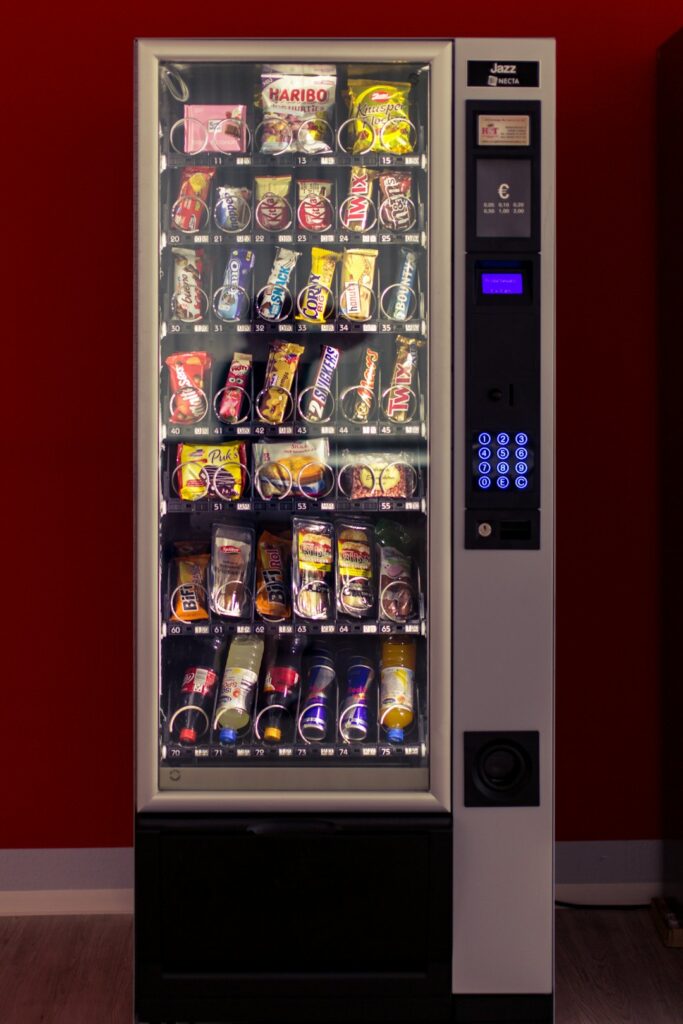

Machine format affects both choice and replenishment. Snack models can hold items such as bars, biscuits and crisps, while drink models are suited to bottled or canned refreshments. A combination machine brings both categories together where floor space is limited, although its internal capacity must still match expected use. Consider the mix rather than counting product selections alone. A machine filled with popular drinks but very few suitable snacks may disappoint users. It is worth asking staff which products they would actually buy before deciding how much space each category deserves.
Measure the proposed location before anyone orders equipment. Check the available width, depth and height, then allow room for people to stand in front of the machine without blocking a doorway, corridor or shared work area. Note the position of nearby power points and confirm that the route from delivery access to the final site is practical. Refrigerated equipment also needs a suitable setting with adequate ventilation and protection from unnecessary heat. A quick sketch on the facilities plan can prevent the familiar problem of discovering that a machine fits on paper but not through the chosen doorway.
Payment arrangements influence whether the machine is convenient during a normal working day. Cashless payment can be useful in offices where few people carry coins, while some sites may still prefer to offer cash as an option. Confirm which payment methods are appropriate for the intended users and whether the site has any rules about receipts, refunds or staff purchases. A short notice explaining how to report a failed transaction prevents reception from becoming the default help desk. Record the contact process beside the machine, rather than relying on someone to remember where the details were filed.
Stock planning should reflect the working pattern of the site. Review sales by product and time period, then adjust quantities instead of repeatedly ordering the same range. Keep a simple record of items that sell out, remain untouched or are requested by name. Products should be stored and rotated sensibly, with expiry dates checked during each refill. If the machine serves a mixed workforce, include a reasonable range of drink and snack preferences rather than assuming one team represents everyone. A quick check of the replenishment sheet before leaving the premises can prevent a return visit for one missed item.
Cleaning, presentation and service affect whether people continue using the machine. The exterior, payment area and product compartments should be checked as part of the agreed routine, with spills dealt with promptly. Refrigerated models need attention if drinks are not staying suitably cool, but staff should follow the supplier’s guidance rather than attempting repairs themselves. Keep a record of faults, failed payments and products that become trapped. Arranging dependable vending machine servicing gives the site a clear route for faults and helps separate routine restocking from work that needs a qualified technician.
Before installation, agree who owns each part of the process. Facilities staff may approve the location, finance may need sales or payment records, and a workplace contact may coordinate access for delivery and service visits. Put those names in the site notes along with the machine position, power details and preferred restocking window. After the first few weeks, ask users for specific feedback and compare it with the stock record. A machine that needs frequent refunds, sells only one product category or obstructs a busy route may need a different setup, even if the equipment itself is working properly.