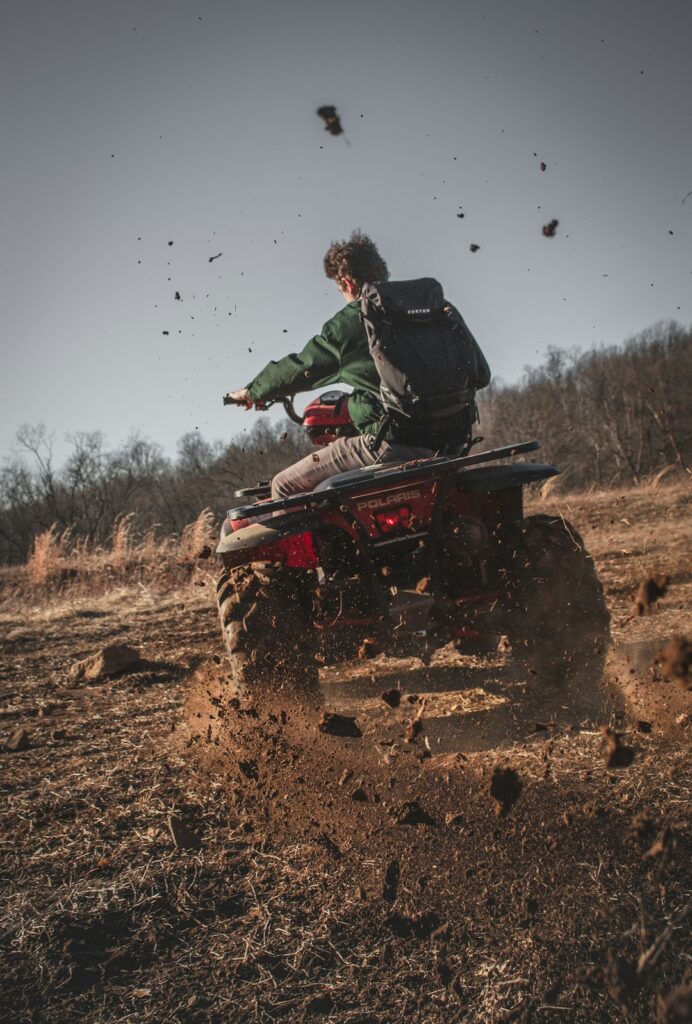

Tread design controls how the tyre interacts with the ground. Deep lugs with generous gaps can help move mud away from the contact area, reducing the chance that the grooves fill with sticky soil. On hard gravel or compacted tracks, closely spaced blocks may provide steadier contact and a less wandering feel. A mud tyre can therefore seem imprecise on a firm road, while a tightly packed tread may struggle to clear itself in a boggy paddock. Look at lug spacing, shoulder shape and the intended use, not just the most aggressive pattern on the rack.
Tyre dimensions deserve the same attention as tread. A marking such as 25×8-12 refers broadly to outside diameter, section width and rim diameter, but the actual fit still depends on the ATV and wheel. Increasing width may spread the load over softer ground and improve flotation, yet it can change steering effort and clearance around suspension parts. A larger diameter can add ground clearance while also affecting gearing and available space. Read the machine handbook or fitment data before ordering, then compare the front and rear sizes rather than assuming that a larger tyre is automatically an improvement.
Pressure is one of the easiest variables to adjust and one of the easiest to get wrong. Lower pressure can enlarge the rubber contact area on sand or other soft surfaces, but excessive deflection may make the ATV vague in turns and leave the rim more exposed to impacts. Higher pressure can sharpen response on firm ground, although too much reduces the contact patch and can make the ride harsh. Check pressure with the tyres cold, before the day’s riding has warmed them. Record the setting in a phone note or workshop book, then adjust for the load and surface only within the tyre and vehicle maker’s stated range.
Construction affects how an ATV tyre tolerates work. The carcass is the supporting structure beneath the tread, and its design influences flexibility, impact response and durability. Bias tyres are common in utility applications and may offer a sturdy feel over rough ground. Radial tyres use a different cord arrangement and can produce a different ride and heat response. Neither construction type settles the question by itself. Confirm the load rating as well, since it states the weight the tyre is designed to carry at a specified pressure. Include the rider, fuel, accessories, tools and cargo when checking the machine’s total working load.
A property owner carrying star pickets, fencing wire and a toolbox across rocky ground needs a different compromise from a rider who spends most of the day crossing wet paddocks. On the rocky route, sidewall protection, suitable load capacity and predictable steering may matter more than very open mud lugs. For repeated work in soft, wet soil, wider-spaced tread and self-cleaning ability may be more useful. A sensible habit is to inspect the route before fitting replacements and to write down the usual cargo. That small record prevents a tyre selected for occasional mud from becoming the default for every job. Reviews of atv tyres australia can help compare intended tread uses.
Installation also deserves a deliberate check. Confirm that the tyre is approved for the wheel, that the front and rear sizes suit the ATV, and that any directional arrow points in the correct direction. Do not rely on a visual match if the sidewall markings differ from the original set. After a demanding ride, remove packed mud and inspect for cuts, bulges, exposed cords or stones lodged between tread blocks. Uneven wear can result from incorrect pressure, overloading, alignment, worn steering parts or a tyre that does not suit the work. Finding the cause before fitting another set avoids repeating the same damage.
Road use needs a separate check rather than an assumption based on tread appearance. Confirm that the tyre is suitable for the ATV’s intended road use and follow the applicable local requirements. Keep the manufacturer’s fitment and pressure information with the vehicle, especially if several people maintain it. Before a long trip, check cold pressures, wheel fasteners and sidewalls, then reassess the tyres after the first section of rough ground. For further off road tyre information, compare construction, dimensions, load rating and terrain suitability together instead of judging a tyre by deep grooves alone.